
An illustrated Bible study
When God Seems Silent:
Jesus in the Storm
In this study
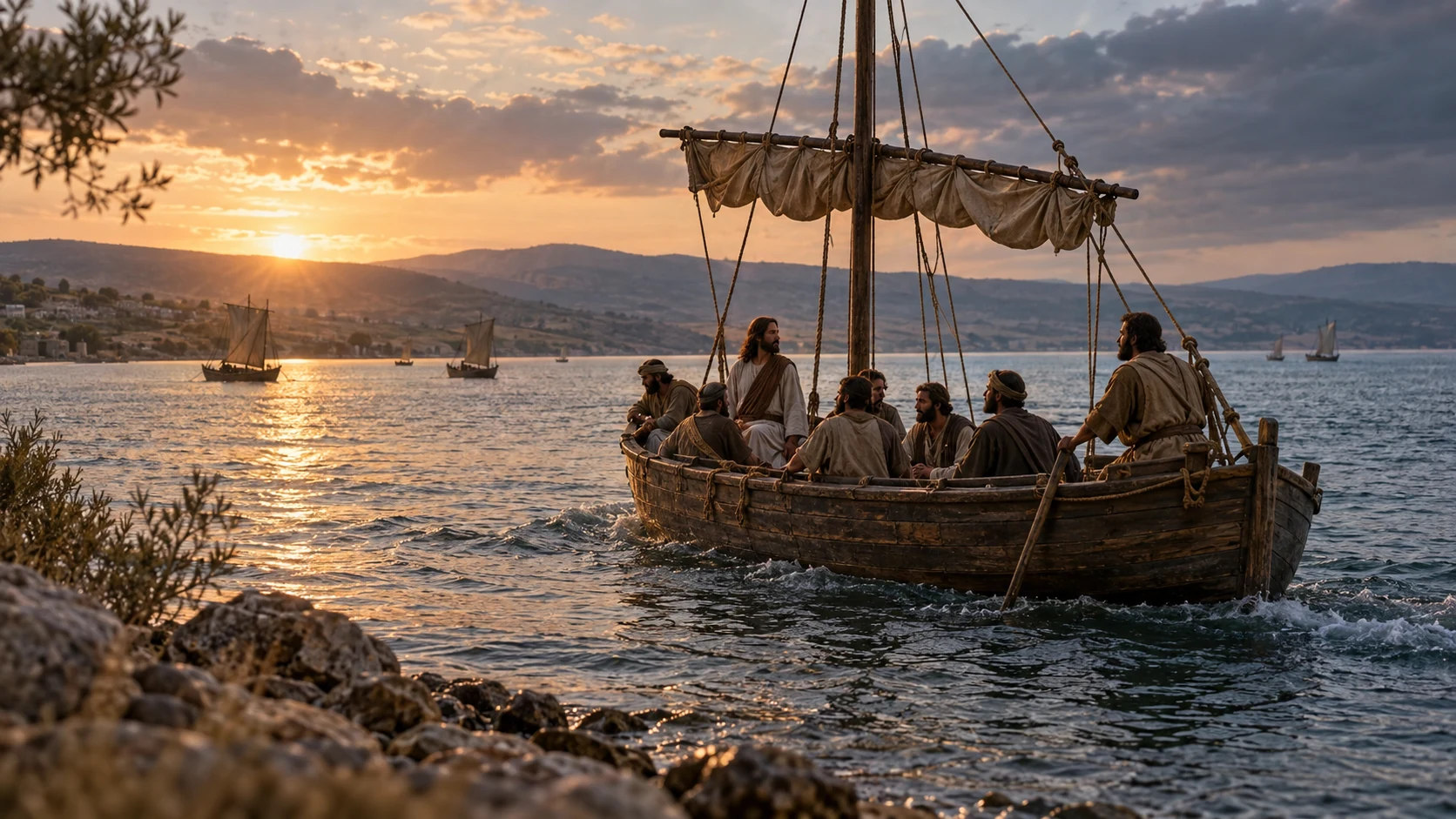
There are times when difficulty raises a question deeper than “How will I get through this?”
We begin wondering whether God cares.
We may still believe in His power while struggling to understand His apparent silence. The disciples faced that struggle during a dangerous crossing with Jesus. What happened aboard their boat teaches us about faith, suffering, and the One we are trusting.
Following Jesus Does Not Prevent Every Storm
Read Mark 4:35–37.
The crossing began at Jesus’ direction. The disciples followed Him, yet their boat encountered a fierce storm.
Their obedience had not kept them out of danger.
That matters when we examine our own difficulties. Trouble alone does not prove that we have taken the wrong path or that God has rejected us.
The disciples were facing something beyond their ability to control. Their circumstances exposed how much they needed the Lord.
When Fear Becomes a Question About His Care
Read Mark 4:38.
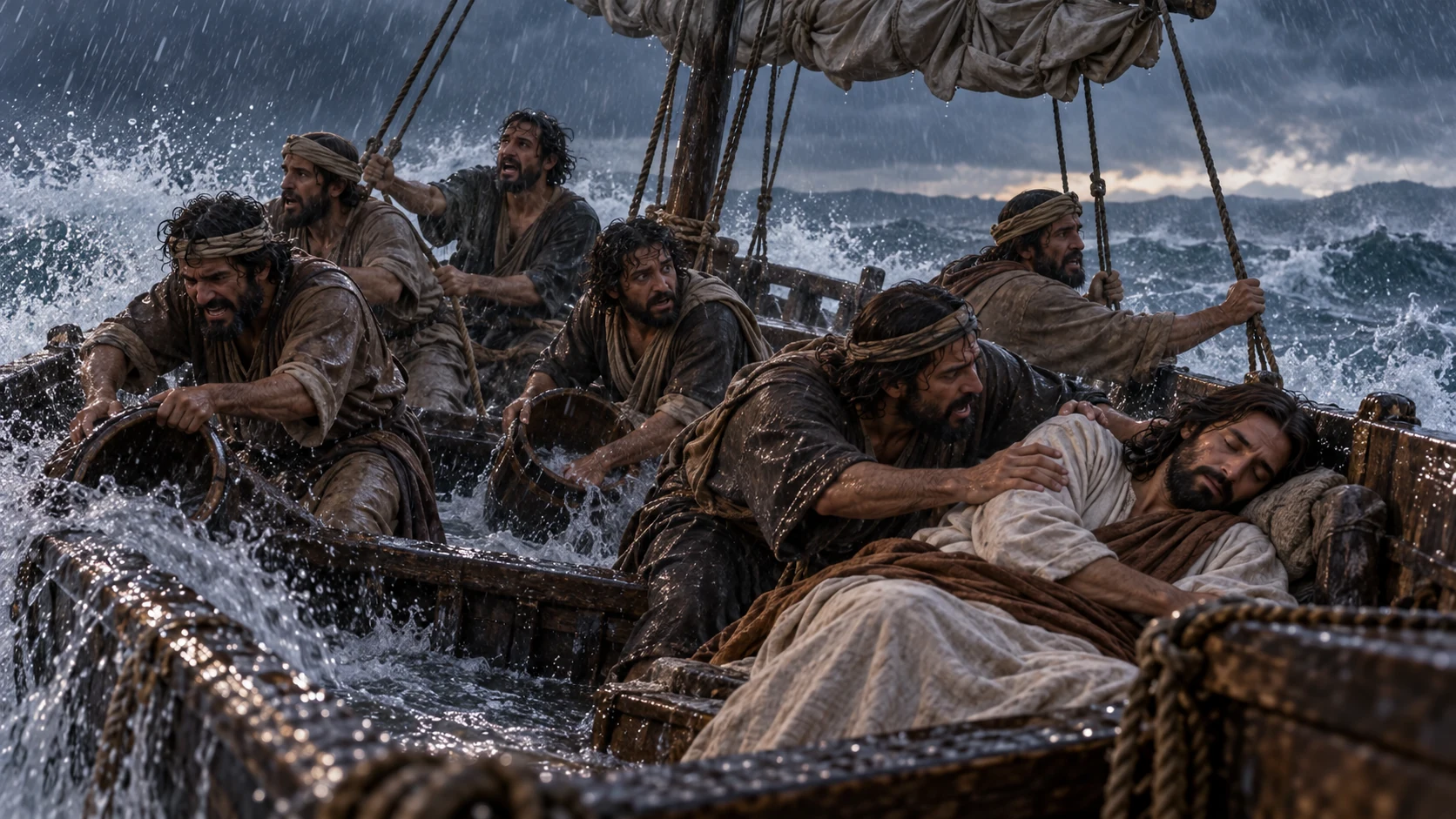
Jesus was asleep while the boat filled with water. The disciples woke Him and questioned whether He cared that they were perishing.
Their danger was real. But their conclusion about His care needed correction.
We can make a similar judgment when help does not arrive as quickly as we want. Waiting becomes evidence, in our minds, that God is unconcerned.
This passage invites us to examine that assumption. Jesus’ sleep did not mean that He lacked power, and His apparent inactivity did not establish indifference.
The Storm Reveals Who Jesus Is
Read Mark 4:39–41; Luke 8:24–25.
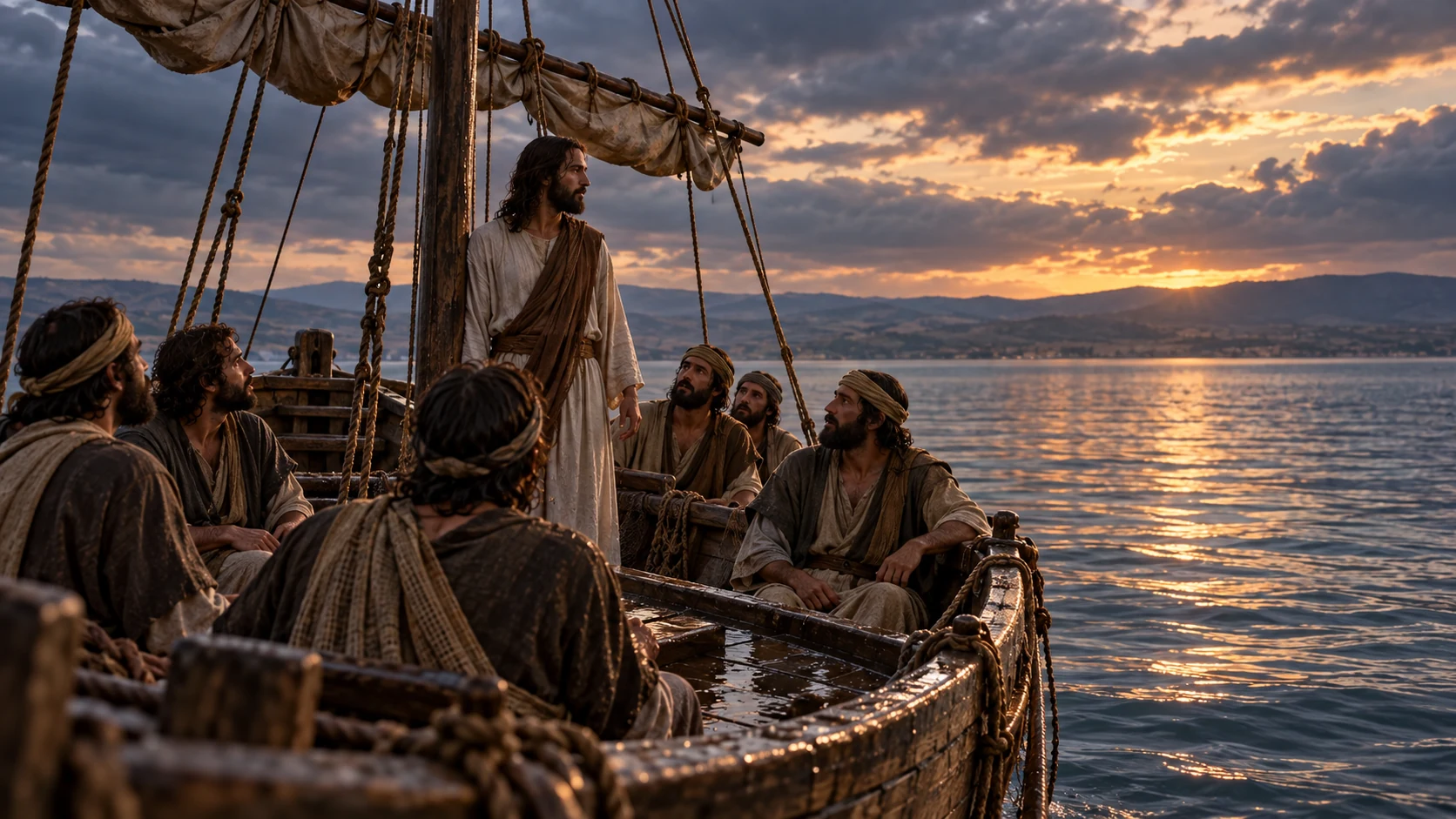
Jesus addressed the wind and water, and the storm became calm.
The disciples then confronted a question greater than the danger they had just escaped: Who was this, that even the wind and sea obeyed Him?
The miracle directs our attention to Jesus’ authority. The disciples needed a clearer understanding of the Person beside them.
Our faith also depends on whom we believe Jesus to be. Remembering His authority changes how we approach circumstances that exceed our own strength.
What Can Grow While We Are Waiting?
Read James 1:2–4.
James explains that the testing of faith produces patience, or endurance. As endurance develops, Christians grow toward spiritual maturity.
That gives suffering a dimension we may overlook. We naturally concentrate on getting relief. Yet our response during the difficulty also matters.
Endurance means continuing faithfully under pressure. It includes holding on to hope and continuing to love others when life is painful.
Christian joy during trials does not require pretending that suffering feels pleasant. We can grieve while recognizing that faithfulness through hardship can produce growth.
Ask for Wisdom
Read James 1:5–8.
God invites those who lack wisdom to ask Him.
During a trial, we may not discover every reason for what has happened. But we can seek wisdom about how to respond.
We can ask for help recognizing our responsibilities, resisting bitterness, and remaining obedient. Prayer should express trust in God, rather than become a last experiment after everything else has failed.
Faith Beyond the Immediate Outcome
Read James 1:12.
James points the enduring believer toward the crown of life promised to those who love God.
Our hope reaches beyond immediate relief. The Christian life includes suffering, but it also includes a promised future that suffering cannot erase.
The storm account calls us to take Jesus seriously. James calls us to remain faithful under pressure.
Together, they challenge us to examine where our confidence rests when we cannot control what happens next.
Questions for Reflection
- Why is trouble an unreliable measure of God’s care?
- What does Jesus’ command over the storm reveal about Him?
- How does endurance differ from simply waiting for a problem to disappear?
- What wisdom do you need to ask God for today?
- What would a faithful response to your present difficulty look like?
Images are AI-generated illustrations of the biblical account.
← All written Bible lessons